
By Sarah Wickens, Special Education Advocate, IEP Defenders
Reviewed by Nick Shook, Esq.
Advocating came naturally to me as the parent of a child who showed noticeable differences from the time he was just a few years old. Although, if I’m being honest, I’d call what I was doing arguing.
I was naive. I had no idea that it would take years to uncover the layers of his invisible disabilities, and even longer for me to learn how to advocate effectively for him.
I was a stay-at-home mother of three children for 17 years. Two of my children were typically developing, while my son faced challenges that I didn’t yet fully understand. My late husband’s career required us to relocate frequently, and we rarely stayed in one place for more than 12 months.
During those years, our son struggled with school, friendships, and physical activities. At every new school, I was called into meetings to discuss his participation and grades. And at every meeting, I walked out feeling deflated and confused. Rarely did anyone offer potential solutions, and never once was an assessment for special education eligibility suggested.

Starting over with a new pediatrician every time we moved was equally discouraging. I was given the same 7–10 minutes as every other patient, which wasn’t even close to enough time to explain what was happening or ask the questions I desperately needed answered.
When we finally moved to California, I felt a sense of relief. I was hopeful that we might finally find a pediatrician and school staff willing to work collaboratively with us.
Finally, Someone Was Listening
I watched my son continue to struggle at his new school until, finally, someone suggested scheduling an SST (Student Study Team) meeting to discuss his support needs.
During that meeting, a special education teacher named Jenn stopped the conversation early on and said something I will never forget:
“The focus of this meeting is that we have a child struggling. It is our job to remember why we are here.”
For the first time, I felt like someone truly understood.

The team told me they would conduct psychoeducational testing in all areas of suspected disability. I cried with relief as I signed the consent form.
Just shy of 60 days later, my son was found eligible for an Individualized Education Program (IEP).
Armed with that document, I thought we would finally make some headway.
The reality was far from what I imagined.
I found myself torn between two worlds. I volunteered regularly at the school where all three of my children attended, and I genuinely wanted to support the staff and parent community. But I also needed to push for what my son needed without being labeled a difficult parent.
I dreaded hearing, “Can I talk to you for a minute?” from his teacher or, occasionally, the principal when I was on campus.
Searching for Answers Outside the School System
One day, a mom I had befriended handed me a book that changed my life: The Highly Sensitive Child by Elaine N. Aron, Ph.D.
Before I made it to page 14, I was sitting in my driveway in tears.
I was also angry.
Why had no doctor ever mentioned sensory processing disorder? Why had I spent so many years trying to understand my child without anyone pointing me in this direction?
I immediately began researching behavioral pediatricians through our health insurance so we could get a comprehensive assessment.
The wait was nearly two years.
TWO YEARS!
I begged my husband to understand that paying out of pocket was what we needed to do to get answers. After several discussions, he agreed.
The assessments and subsequent report from the behavioral pediatrician were enlightening. We finally had a clearer understanding of our son’s needs and a direction to move forward.
I brought the information back to the school.
Nothing changed.
I couldn’t understand why. I wasn’t asking for anything more than what my child needed.
Next, I sought out an educational specialist who assessed his learning profile. I presented those findings to the school, too.
Still, nothing changed.
I knew how fortunate we were to have access to specialists we could pay for ourselves. But I also knew that families shouldn’t have to spend thousands of dollars out of pocket just to understand their child’s needs and get appropriate support at school.
Learning to Let Someone Else Advocate
Our journey eventually led us to a private school, where my son spent two and a half years before experiencing relentless bullying by his peers.

He left in eighth grade and transitioned back to public school without an IEP. We had let the IEP go when he left public school after fifth grade because the private school had been supportive of what we already knew he needed to access his education.
As we prepared for his return to public school, my anxiety skyrocketed. I was terrified he would struggle all over again.
So I began interviewing special education advocates.
My husband thought I was off the deep end.
I thought I had no choice.
We hired one.
For the first time, I was able to take a backseat in advocating for my son. It was a welcome change, and I absorbed as much information as I could from watching someone approach his needs from a different perspective.
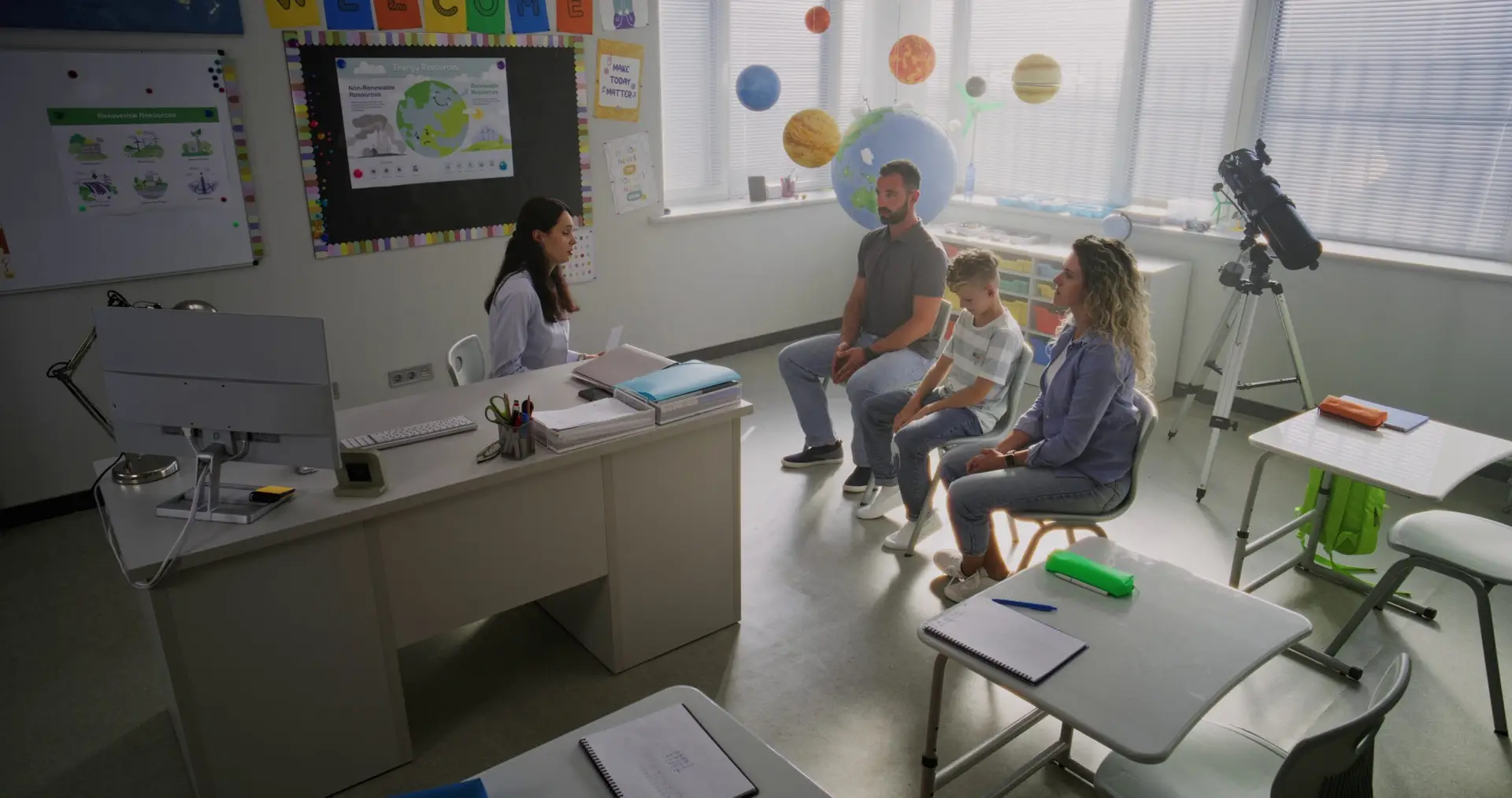
Our initial meetings included upwards of 14 adults sitting in a room discussing my son, who wasn’t even present.
But this time, things were different.
The team developed a robust IEP and worked collaboratively to find ways to support him as he reentered public school.
I finally felt like he would be supported.
And I finally felt heard.
Finding My Calling
Around that same time, I learned about a Special Education Advocacy certification program and began researching it.
After talking with my husband, a few friends, and the advocate we had hired, I decided to enroll in the next session.
I spent the next 18 months learning, researching, and advocating before becoming a professional special education advocate.
Like so many parents of children with disabilities, I have countless stories of how the system failed my son and how those experiences affected him and our entire family.
The system is flawed.
Heavily flawed.
When my son graduated from high school, we exhaled.
That chapter was finally over.
Why I Do This Work
My experience as a parent navigating special education is unique to me, and I draw on it every day when helping families in my community and through my work as an advocate.
But I’ve learned that only part of my job is advocating for a student.
I also help parents understand what special education is and what it isn’t. I connect families with community resources and support services, including occupational therapy, speech therapy, specialized tutoring, and more.
I want to be ready to offer meaningful support when a family reaches out, because I remember what it felt like to have questions and nowhere to turn.
I listen to parents and teachers alike. I look for opportunities to collaborate, build understanding, and bridge the gaps that too often leave children without the support they need.
I know what it’s like to sit in those meetings feeling overwhelmed, confused, and unheard. I know what it’s like to wonder whether you’re asking for too much when all you really want is for your child to have a fair chance.
And I know how much it means when someone finally listens.
This career heals a little piece of me every single day.
Because now, instead of only remembering all the times the system failed my son, I get to see what happens when the right supports are put in place.
I get to see children make progress.
I get to see parents find their voices.
And I get to help other families find the support I spent so many years searching for.